🥕 Organic vs Conventional Vegetables: The Real Difference Explained
When choosing what to eat, understanding the distinction between organic and conventional vegetables is essential. While both may appear similar, their growth methods, health impact, and environmental footprint differ significantly.
🌱 What Are Organic Vegetables?
Organic vegetables are cultivated using natural farming practices, avoiding synthetic pesticides, chemical fertilizers, and genetically modified seeds.
Key characteristics include:
- Chemical-free growth
- Natural soil enrichment
- Seasonal and local harvesting
- Preservation of biodiversity
🌽 What Are Conventional Vegetables?
Conventional vegetables are grown using modern agricultural methods that may include:
- Synthetic fertilizers to boost growth
- Chemical pesticides for pest control
- Genetically modified seeds in some cases
- Intensive irrigation and monocropping
While conventional methods increase yield, they can impact soil health, nutrient content, and consumer safety.
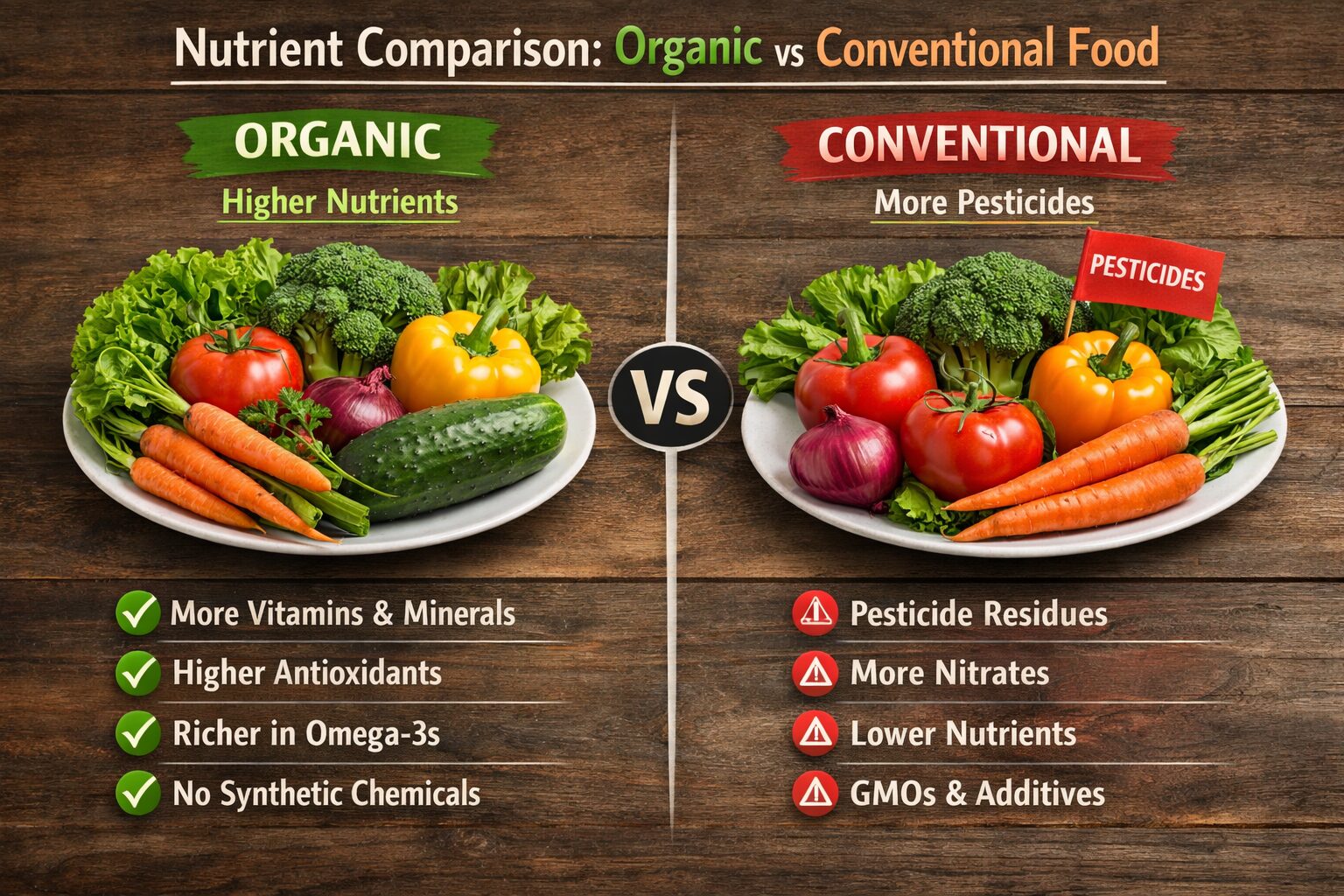
⚖️ Comparing Organic vs Conventional Vegetables
1️⃣ Health & Safety
- Organic: Minimal chemical residues, safer for long-term consumption
- Conventional: Higher risk of pesticide exposure, potential long-term health concerns
2️⃣ Nutritional Value
- Organic: Often higher in antioxidants, vitamins, and minerals
- Conventional: May have lower nutrient density due to synthetic inputs
3️⃣ Taste & Freshness
- Organic: Grown naturally, picked closer to ripeness, richer flavor
- Conventional: Faster growth and storage may compromise taste
4️⃣ Environmental Impact
- Organic: Preserves soil health, reduces water pollution, supports pollinators
- Conventional: Chemical runoff, soil degradation, biodiversity loss
5️⃣ Cost & Accessibility
- Organic: Generally more expensive due to labor-intensive methods
- Conventional: Cheaper and more widely available, but with hidden environmental and health costs
👩🌾 Why Choose Organic?
Choosing organic vegetables means choosing:
- Better personal health
- A safer environment
- Ethical support for sustainable farming
- Higher quality and natural taste
It is a decision that benefits both you and the planet
Lorem ipsum dolor sit amet, consectetur adipiscing elit. Cras a cursus odio, id maximus neque. Quisque at ex porta, convallis ligula sed, auctor nisl.